Amateur Theatre in Spain
Useful Spanish sentences for joining an amateur theatre group, rehearsing and surviving opening night.
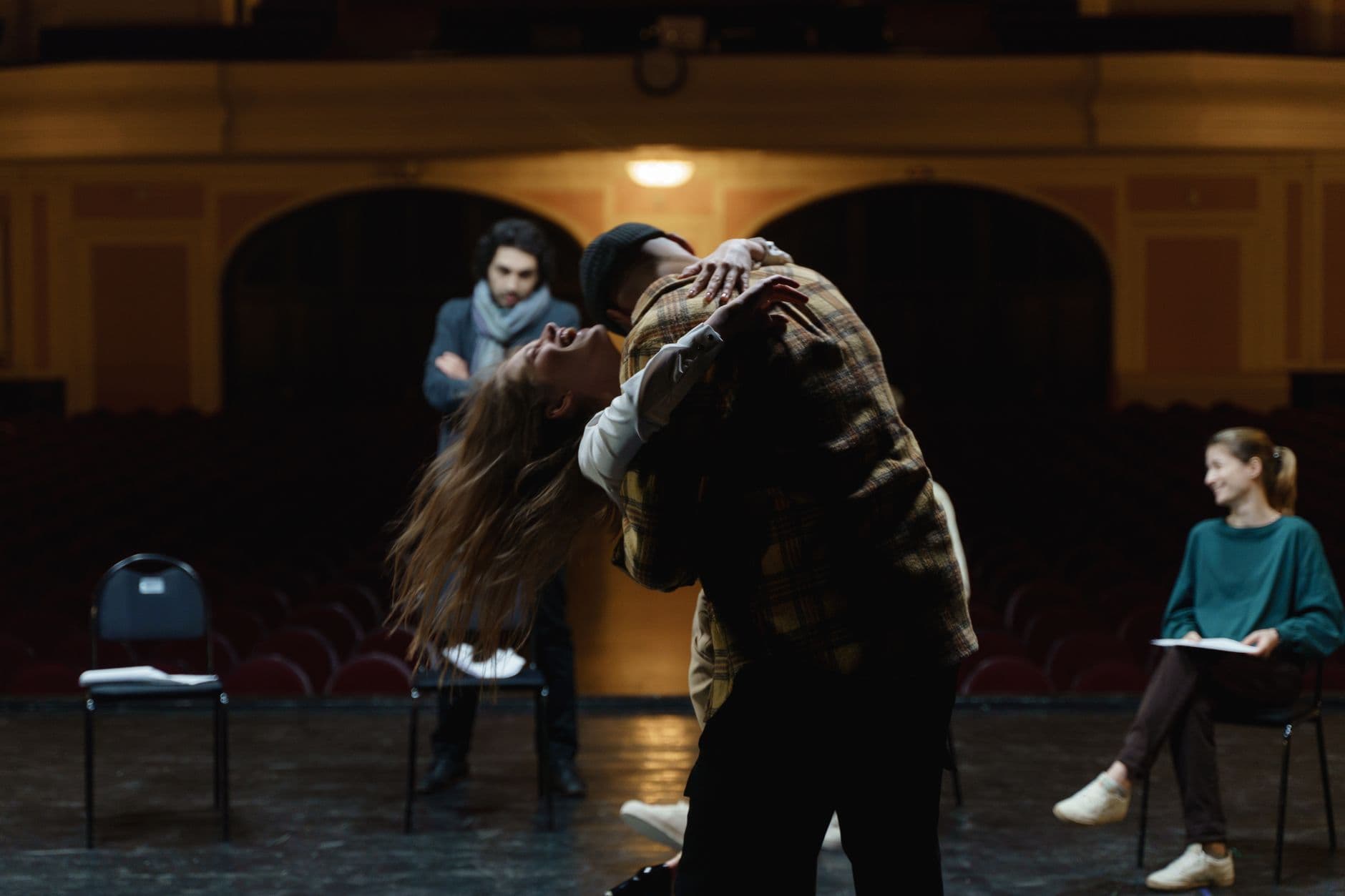
Many Spanish towns have a grupo de teatro aficionado that rehearses in the centro cívico and puts on a play or two a year for friends and neighbours. You audition with a short scene, learn your texto de memoria, ask for el pie when you forget your cue, and before going on stage nobody says good luck: they say ¡mucha mierda!. These sentences follow a newcomer from the audition through rehearsals to a sold-out estreno.
- 1
¿Hay algún grupo de teatro aficionado por aquí?
Is there an amateur theatre group around here?
- 2
¿Cuándo son las próximas pruebas?
When are the next auditions?
- 3
Me gustaría presentarme para un papel pequeño.
I'd like to try out for a small part.
- 4
¿Tengo que preparar un monólogo?
Do I have to prepare a monologue?
- 5
¡El papel es tuyo!
The part is yours!
- 6
Tengo que aprenderme el texto de memoria.
I have to learn my lines by heart.
- 7
Me quedé en blanco en mitad de la escena.
I went blank in the middle of the scene.
- 8
¿Me das el pie?
Can you give me my cue?
- 9
Habla más alto, que al fondo no se te oye.
Speak up, they can't hear you at the back.
- 10
No le des la espalda al público.
Don't turn your back on the audience.
- 11
El ensayo general es el viernes.
The dress rehearsal is on Friday.
- 12
Tengo un nudo en el estómago.
I've got butterflies in my stomach.
- 13
¡Mucha mierda!
Break a leg!
- 14
Hemos agotado las entradas para el estreno.
We've sold out the tickets for opening night.
- 15
¿Dónde están los camerinos?
Where are the dressing rooms?
- 16
Si se me olvida una frase, improviso.
If I forget a line, I'll improvise.
- 17
Nadie se dio cuenta de nada.
Nobody noticed a thing.
- 18
Estuviste genial en el escenario.
You were brilliant on stage.
- 19
El público se puso de pie para aplaudir.
The audience gave us a standing ovation.
- 20
¿Lo celebramos tomando algo?
Shall we celebrate with a drink?