Mapa y brújula
El mapa, la brújula, orientarse y perderse.
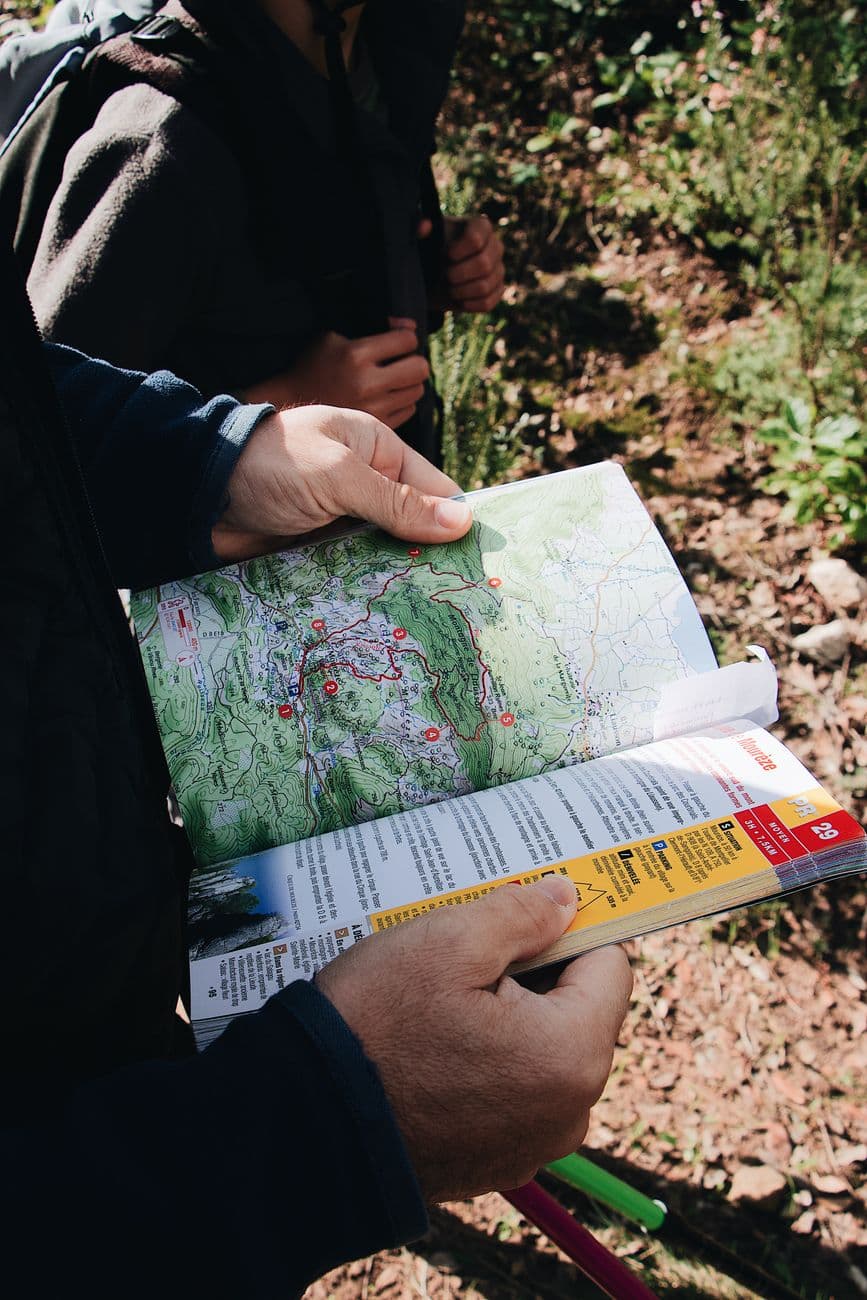
Saber leer un mapa y usar una brújula sigue siendo clave en las montañas de Estados Unidos, donde la señal desaparece por completo. Si te pierdes, la regla de oro: detente y piensa, no camines al azar. Es lo que se enseña con la sigla STOP (Stop, Think, Observe, Plan).
- 1
There's no service out here.
Aquí no hay señal.
- 2
I'll have to use the map.
Voy a tener que usar el mapa.
- 3
Do you know how to use a compass?
¿Sabes usar una brújula?
- 4
Which way is north on the map?
¿Dónde queda el norte en el mapa?
- 5
North is always at the top.
El norte siempre está arriba.
- 6
Line the map up with the ground.
Alinea el mapa con el terreno.
- 7
That's called orienting the map.
Eso se llama orientar el mapa.
- 8
What are those brown lines?
¿Qué son esas líneas cafés?
- 9
Those are contour lines.
Son curvas de nivel.
- 10
Lines close together mean it's steep.
Si las líneas están muy juntas, es empinado.
- 11
Where are we on the map?
¿Dónde estamos en el mapa?
- 12
We're at the stream crossing right here.
Estamos en el cruce del arroyo, justo aquí.
- 13
That's a really good landmark to use.
Es un muy buen punto de referencia.
- 14
I think we passed the turn.
Creo que nos pasamos el desvío.
- 15
Stop, and don't just keep walking around.
Detente, y no sigas dando vueltas.
- 16
Look, listen, and think first.
Mira, escucha y piensa primero.
- 17
Go back to the last known point on the map.
Vuelve al último punto conocido en el mapa.
- 18
That's safer than pushing on.
Eso es más seguro que seguir a toda costa.
- 19
We told someone our route.
Le dijimos a alguien nuestra ruta.
- 20
That's the most important step.
Ese es el paso más importante.