Mapa e bússola na trilha
O mapa, a bússola, se orientar e se perder.
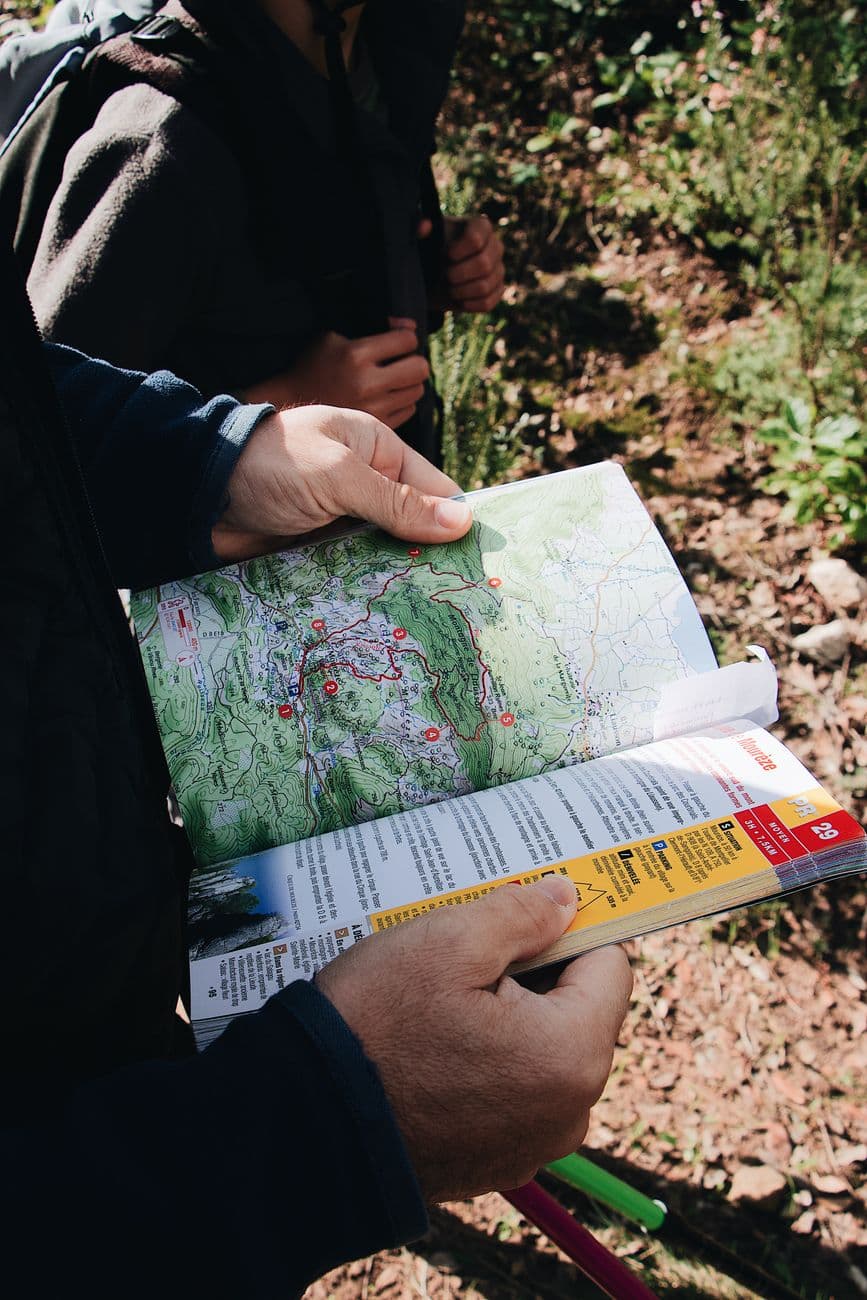
Saber ler mapa e bússola continua essencial nas montanhas americanas, onde o sinal do celular some de vez. Se você se perder, a regra de ouro é parar e pensar, não sair andando à toa — os americanos ensinam isso com a sigla STOP (Stop, Think, Observe, Plan).
- 1
There's no service out here.
Não tem sinal aqui.
- 2
I'll have to use the map.
Vou ter que usar o mapa.
- 3
Do you know how to use a compass?
Você sabe usar uma bússola?
- 4
Which way is north on the map?
Para que lado fica o norte no mapa?
- 5
North is always at the top.
O norte fica sempre em cima.
- 6
Line the map up with the ground.
Alinha o mapa com o terreno.
- 7
That's called orienting the map.
Isso se chama orientar o mapa.
- 8
What are those brown lines?
O que são essas linhas marrons?
- 9
Those are contour lines.
Essas são curvas de nível.
- 10
Lines close together mean it's steep.
Linhas bem juntas quer dizer que é íngreme.
- 11
Where are we on the map?
Onde a gente está no mapa?
- 12
We're at the stream crossing right here.
A gente está na travessia do riacho, bem aqui.
- 13
That's a really good landmark to use.
Esse é um ótimo ponto de referência.
- 14
I think we passed the turn.
Acho que a gente passou da entrada.
- 15
Stop, and don't just keep walking around.
Para, e não fica andando à toa.
- 16
Look, listen, and think first.
Olha, escuta e pensa primeiro.
- 17
Go back to the last known point on the map.
Volta para o último ponto conhecido no mapa.
- 18
That's safer than pushing on.
É mais seguro do que insistir em seguir em frente.
- 19
We told someone our route.
A gente avisou alguém do nosso trajeto.
- 20
That's the most important step.
Essa é a etapa mais importante.